Many studies have shown that dyslexia affects certain areas of the brain, and in a new study done by the Max Planck Institute for Human Cognitive and Brain Sciences in Leipzig, researchers targeted a new part of the brain and found results.
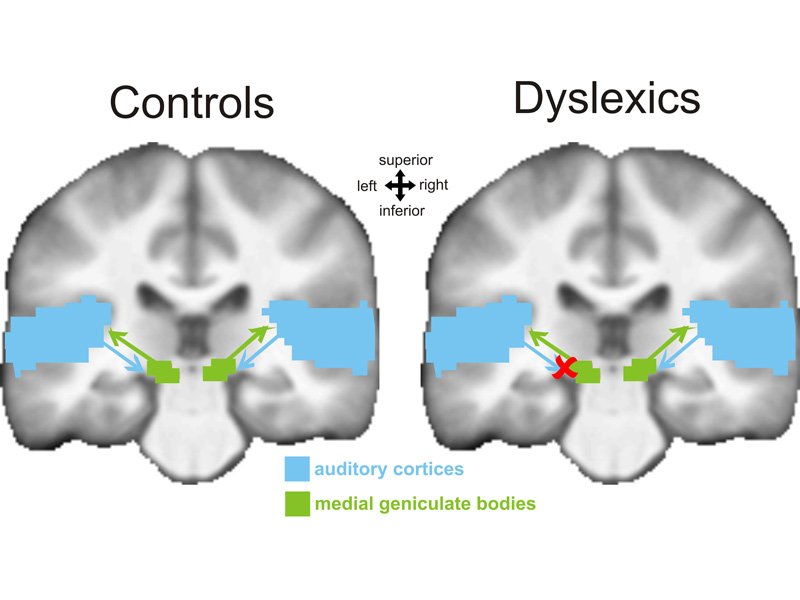
The researchers conducted two experiments testing speech comprehension and found that dyslexics’ brains don’t process speech sounds properly. During the tests in dyslexics, the thalamus, or the “medial geniculate body,” had abnormal responses to the speech sounds while those without dyslexia responded properly.
These results helped the researchers conclude that this variation in the thalamus explains why the symptoms of dyslexia are so varied.
Though there isn’t a cure, this discovery can help the treatment process for dyslexia.



Join our email list
Subscribe to receive
The Latest from DyslexiaHelp
every other month.