
Focus on Skills That Underlie Reading
The following is a list of some programs that have been developed for struggling readers and writers. Some were created specifically for dyslexia and are undergirded in the tenets of Structured Literacy.
Depending on the program, it may focus on one of more of the various skills that underlie reading—oral language, phonemic awareness, vocabulary, comprehension, spelling, or writing. You will need to determine which program works best for your child.
Most generally, these programs are best used in an individual or small group therapy setting. Professionals will want to familiarize themselves with the program. Some require specific training. For example, Orton-Gillingham is a multi-faceted approach that was created specifically for dyslexics. It teaches reading, writing, and spelling by using auditory, visual, and tactile measures. Many other reading and writing programs utilize the Orton-Gillingham approach.
When researching a Structured Literacy-based program, such as one that is built on the Orton-Gillingham approach, either for training courses or to access a certified tutor or therapist, look for programs/courses that have been accredited. The International Multisensory Structured Language Education Council (IMSLEC) holds their accredited courses to rigorous standards that in turn allow the courses to certify qualified individuals who meet these standards as teachers, therapists and instructors. These accreditation-certification credentials ensure access to reliable and effective instruction. Other reliable resources for programs serving dyslexics are found through the Academic Language Therapy Association and the International Dyslexia Association.
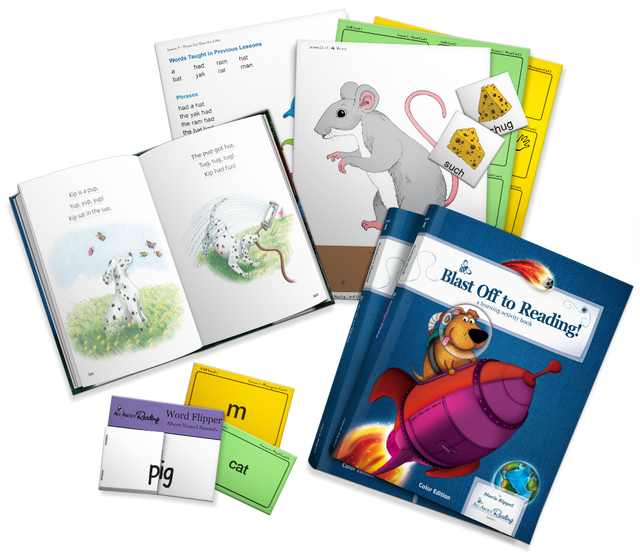
All About Reading teaches phonics, decoding, fluency, and comprehension in a fun and engaging way. All About Spelling teaches encoding skills, spelling rules, and multisensory strategies to help students become proficient spellers for life.

The Barton Reading & Spelling System is a one-on-one tutoring system that improves spelling, reading, and writing skills. It works well for children, teenagers, and adults who struggle due to dyslexia or a learning disability.
Beyond Decodables offers a complimentary set of books with aims to support young readers’ success by allowing them to decode words under meaningful contexts. The books were made in collaboration with Boston Public Schools and are both research-based and approved by reading experts, teachers, and children.

Equipped for Reading Success is a comprehensive step-by-step program that presents more than 20 strategies to improve memory and effortless word retrieval skills in order to overcome reading difficulties for early level readers.
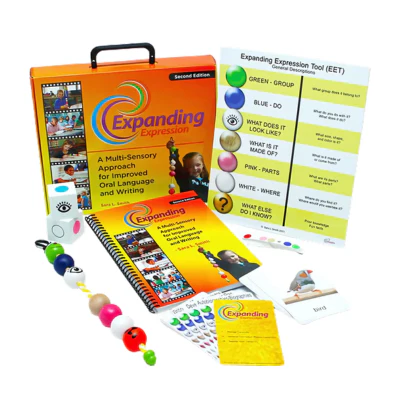
This multi-sensory mnemonic strategy facilitates language organization. The kit targets elementary school students, though it can also be used with older students to help with vocabulary, writing, and organization.

The Heggerty Program contains systematic phonemic awareness lessons for students in the 2nd grade and above. These lessons are designed for small groups or individual students who have difficulty decoding words naturally.
Comprised of three programs, this method encourages improved reading comprehension by targeting basic phonemic awareness through a mix of blending, segmenting, and sound exercises.
This program encourages phonemic awareness by helping users understand how mouth movements correspond to spoken sounds. Children can then apply this understanding to their speech, spelling, and reading and see improvements.
Megawords is the latest aid for educators in teaching reading, spelling, and contextual use of big words. By utilizing a multisensory and easy-to-follow skill progression path, it becomes easier for students to reach reading goals and for teachers to find ways in which to alter their teaching strategies for students who may need more time or a different approach.
Nessy helps students master foundational reading skills. This program is designed to meet the Common Core and most rigorous state standards, the structure is systematic, and data reports are clearly organized and easy to understand.

ReadBright is an effective and structured literacy program designed for beginning readers. Its methods align with the research from the science of reading. It works to incorporate phonemic awareness, phonics, fluency, vocabulary, and comprehension to create instruction that is systematic, clear, cumulative, multimodal, and research-driven.

This program aims to improve reading proficiency through teacher modeling, repetitive reading, and student progress monitoring. It provides students with practice reading and writing problems that help the practitioner gauge progress and set reading fluency goals.

The Sonday System, provided by Imagine Learning and developed by an expert in Orton-Gillingham’s multisensory method for reading information, is designed to teach using a structured literacy approach. In addition to being used in a one-on-one intervention setting, Imagine Learning provides K-12 educators at all experience levels with the training to identify struggling readers and then to intervene using the Sonday System. The system has three levels of small group intervention depending on the needs of the students, as well as a series of lesson plans for teaching an entire class using structured literacy.

SPELL-Links uses a speech-to-print word study approach that leverages the brain’s innate, biological wiring and organization for oral language. Unlike other reading programs, which begin with the written letter and teach students to match the letter to a sound, SPELL-Links first helps students learn how to attend to the sound structure of spoken English words and then how to connect and combine sounds (phonology), letter patterns (orthography, mental orthographic images), and meanings (semantics, morphology) to read and spell words.

SPIRE (specialized program individualizing reading excellence) is a program geared towards PreK-8 grade readers that include data-driven instruction on fluency, comprehension, phonics, phonological awareness, spelling, and vocabulary. The program is designed to be led explicitly by teachers, provide comprehensive assessments to track students’ progress, as well as provide lessons that are easy to follow and teach.

Take flight is a comprehensive curriculum that uses multisensory approaches to provide instruction in writing, reading, and spelling to help students with dyslexia. This program is designed to give students the information they need to understand phonetic regularities for reading, syllable division rules, spelling, and other basic linguistic concepts.

ThinkSRSD provides a structured approach to teach students to become self-regulated writers. Through analyzing examples, receiving explicit instruction about the key features, and practicing exercises with intentional feedback, students learn the skills necessary to become effective writers. Once the scaffolding is in place, teachers work with the students to set goals and provide the necessary support to assist students in reaching these goals, ultimately building the student’s confidence and self-regulation during the writing process. There is no cost to access the website, which is a wealth of information.
The University of Florida Literary Institute has developed a carefully tested systematic program that teaches students the necessary skills for reading proficiency. Its design works to ensure students are able to learn to use these skills with automaticity and confidence. It is intended for foundational instruction for primary grade students as well as intervention for struggling students in any grade.
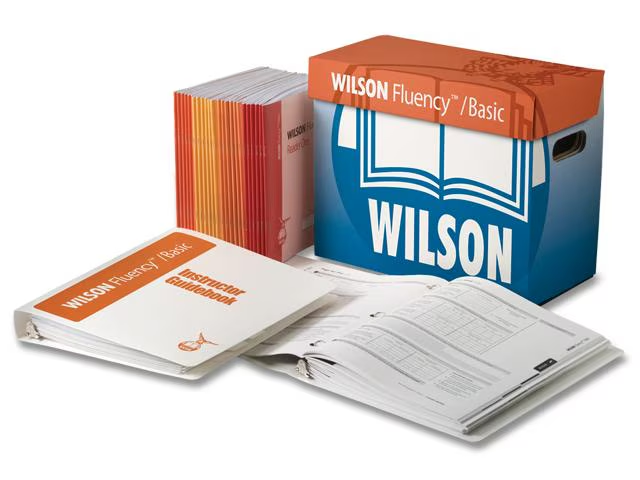
This useful program supplements a typical reading curriculum by providing this additional reading practice with explicit fluency instruction to develop the application of skills with connected text.
This language-based program teaches the fundamentals of vocabulary and language by giving its users the tools to understand the English language coding system. It utilizes the Orton-Gillingham multi-sensory approach to assist readers.

Word Connections is a supplemental reading intervention program that is completely free and was developed by Dr. Jessica Toste and colleagues at the University of Texas. It is intended for students in third grade and above who experience challenges with reading. The tool includes 40 lessons which are each 40 minutes in length and are divided into four instruction units. The instruction utilizes the multisyllabic word reading approach which allows students to manipulate and read words rather than solely focusing on rule-based instruction to support them in gaining a systematic approach to decoding words.
Reading Program Components
| Orton–Gillingham Approach | |
|---|---|
| Unique Features |
|
| Vocabulary-Language |
|
| Phonics |
|
| Phonemic Awareness |
|
| Fluency |
|
| Reading Comprehension |
|
| Written Expression |
|
| The Wilson Reading System | |
|---|---|
| Unique Features |
|
| Vocabulary-Language |
|
| Phonics |
|
| Phonemic Awareness |
|
| Fluency |
|
| Reading Comprehension |
|
| Written Expression |
|
| Lindamood®-Bell | |
|---|---|
| Unique Features |
|
| Vocabulary-Language |
|
| Phonics |
|
| Phonemic Awareness |
|
| Fluency |
|
| Reading Comprehension |
|
| Written Expression |
|
| Read Naturally | |
|---|---|
| Unique Features |
|
| Vocabulary-Language |
|
| Phonics |
|
| Phonemic Awareness |
|
| Fluency |
|
| Reading Comprehension |
|
| Written Expression |
|
| Lexia-Herman Method | |
|---|---|
| Unique Features |
|
| Vocabulary-Language |
|
| Phonics |
|
| Phonemic Awareness |
|
| Fluency |
|
| Reading Comprehension |
|
| Written Expression |
|
| Language! The Comprehensive Literacy Curriculum | |
|---|---|
| Unique Features |
|
| Vocabulary-Language |
|
| Phonics |
|
| Phonemic Awareness |
|
| Fluency |
|
| Reading Comprehension |
|
| Written Expression |
|
| Expanding Expression Tool-2nd Edition; A Multi-Sensory Approach for Improving Oral and Written Language | |
|---|---|
| Unique Features |
|
| Vocabulary-Language |
|
| Phonics |
|
| Phonemic Awareness |
|
| Fluency |
|
| Reading Comprehension |
|
| Written Expression |
|

Join our email list
Subscribe to receive
The Latest from DyslexiaHelp
every other month.